Our story
A family atelier in Thạch Xá.
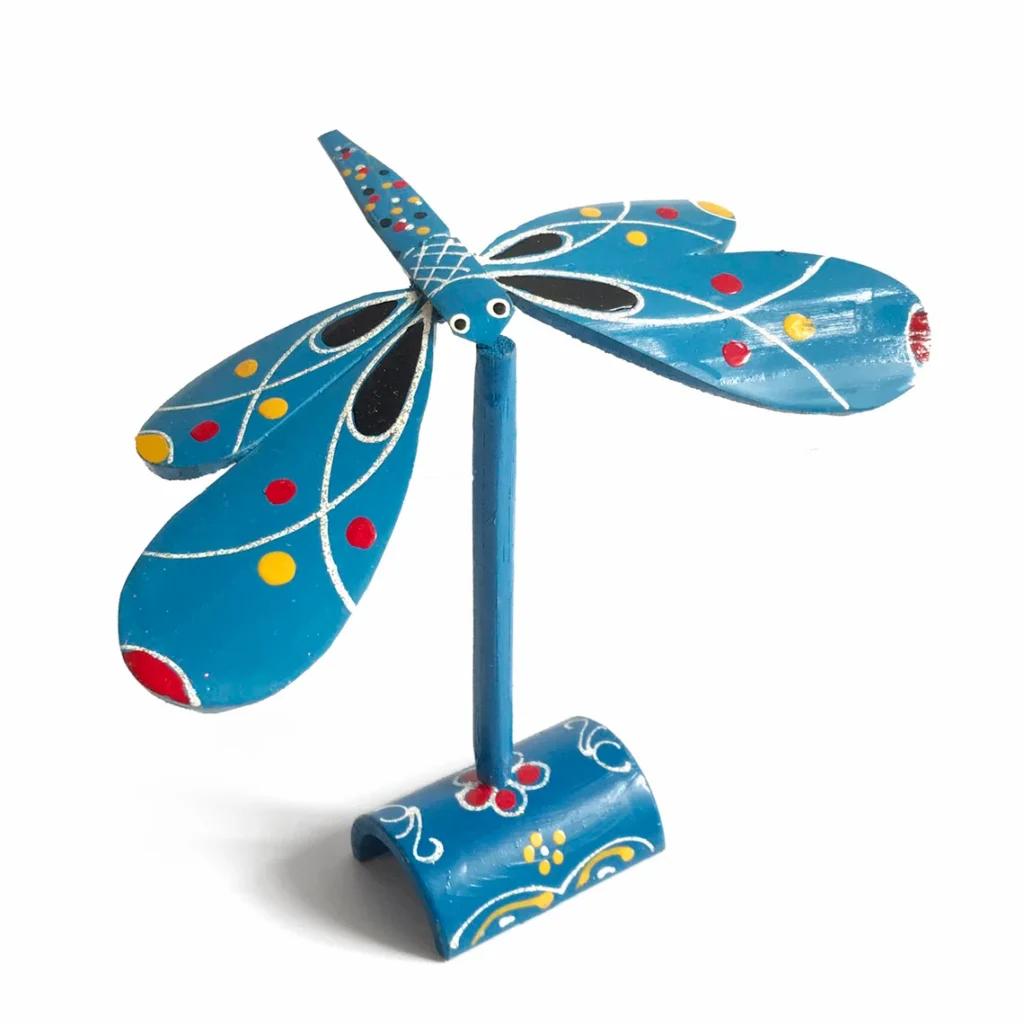
A small workshop north of Hanoi, run by the same two hands since 2000, where bamboo is split by hand and each dragonfly is tuned by feel until it floats in perfect poise.

Our story
A small workshop north of Hanoi, run by the same two hands since 2000, where bamboo is split by hand and each dragonfly is tuned by feel until it floats in perfect poise.
Where we make them
The craft village of Thạch Xá lies about forty kilometres west of central Hanoi, at the foot of the seventeenth-century Tây Phương Pagoda. Today it sits within the commune of Tây Phương — one of the long-standing craft villages of this part of Hanoi, and home to more than twenty years of dedicated dragonfly-making.
Bamboo has always been the village’s material — woven, carved, and shaped into the small objects that furnish a Vietnamese childhood. The dragonfly is one of them, and the piece we have chosen to make well.

The atelier
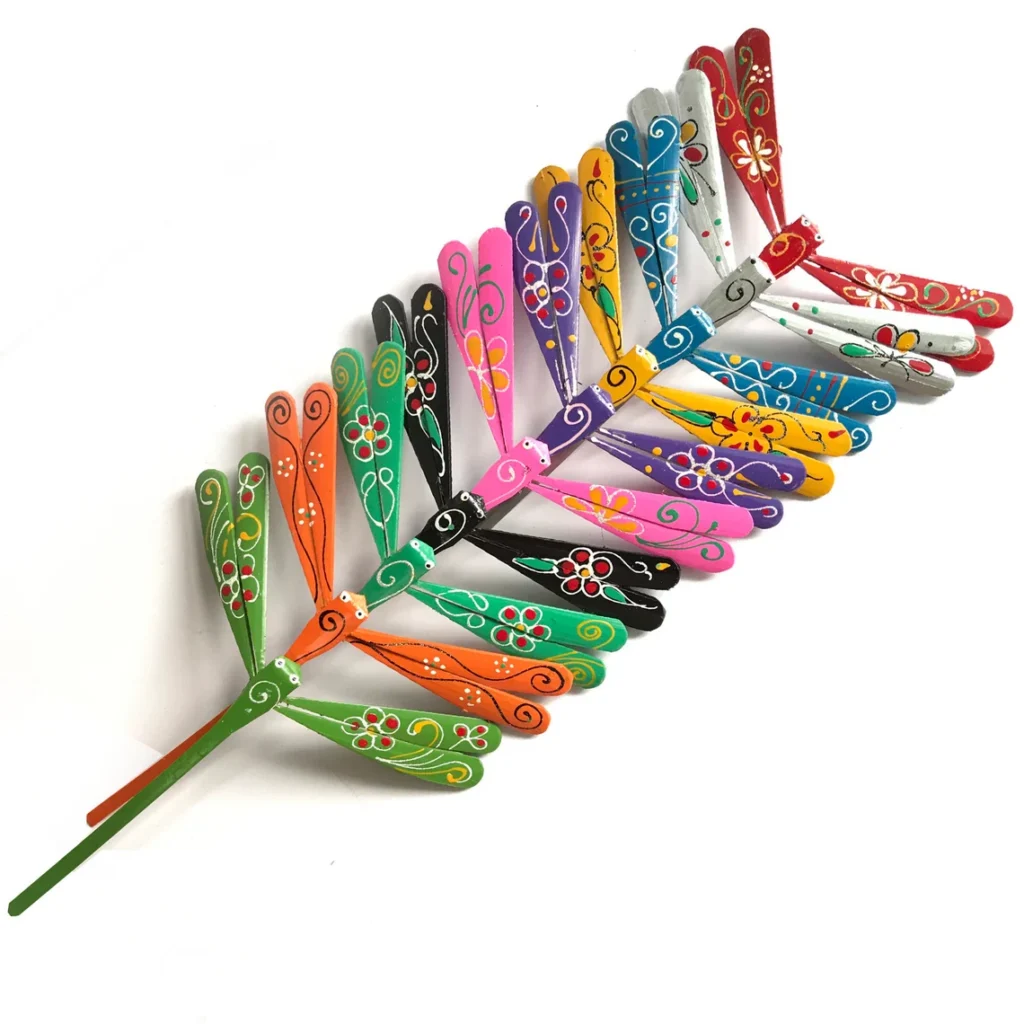
Our atelier takes its name from the two artisans who founded it: Đỗ Văn Liên and Nguyễn Thị Xoan. Husband and wife, two hands on every piece. Liên Xoan is the oldest dragonfly workshop in Thạch Xá, and the craft is now carried forward by their family — children, in-laws, and a handful of neighbours who have worked alongside them for years.
Nothing in the workshop is rushed. A piece is finished when it balances, not before.
Every dragonfly on this site is shipped directly from the Liên Xoan bench in Thạch Xá. There are no middlemen, no bulk packagers, no relabelling. The pair of hands that tuned the piece is the same pair that wrapped it.
The process
Seven unhurried steps, from a length of bamboo to a dragonfly that rests on its beak.

Mature culms from northern Vietnam, chosen for straight grain and even wall thickness.
The bamboo is cured in the open air for several weeks until it is dry, stable, and light enough to balance.
Each culm is split by hand along the grain into thin strips — the body, wings and tail come from the same piece.
Wings are cut to a narrow almond, the body tapered, the beak worked to a fine point — the point everything rests on.
Each surface is sanded smooth — edges softened, splinters removed — so the paint lies evenly.
Water-based paints are brushed on by hand, one piece at a time. Patterns vary slightly — a signature of the hand that made them.
The last step, and the one no machine can do. The centre of gravity sits at the beak. A sliver is shaved here, a touch more paint added there, until the dragonfly rests. No glue, no counterweight — just proportion and feel.
Visit the atelier
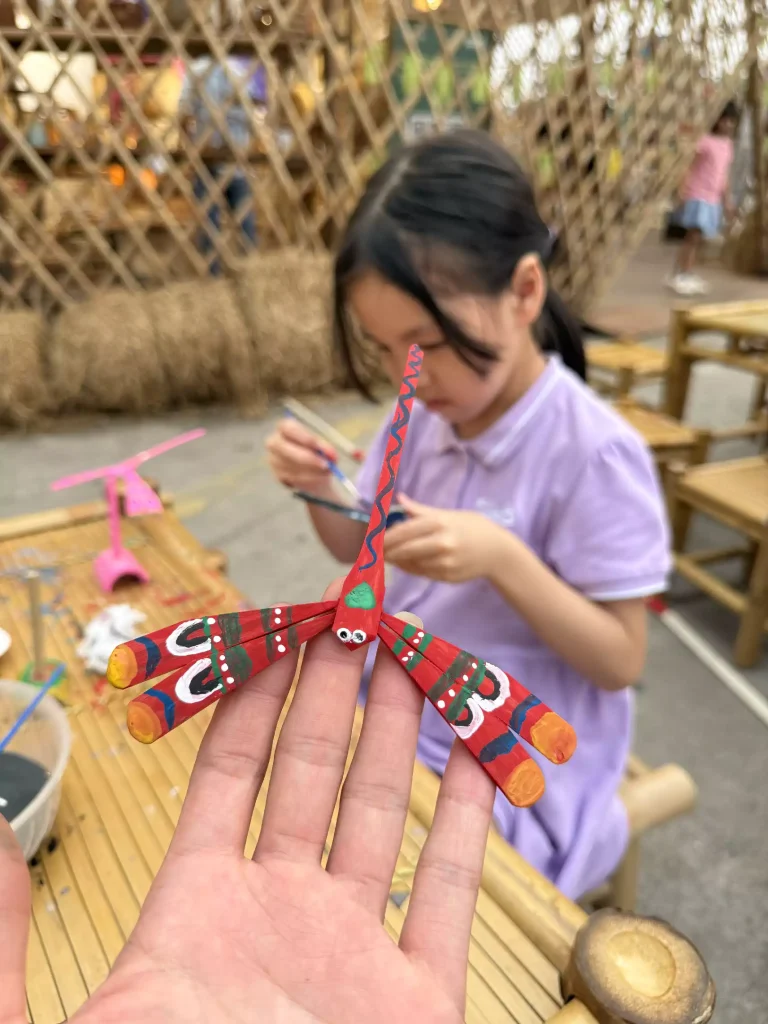
A few afternoons a week we open the painting table to visitors — families, school groups, friends out of Hanoi for the day. You choose a blank bamboo body, paint it, and sit with Liên as he tunes the balance until your dragonfly rests on a single fingertip.
You take it home the same afternoon.
Workshops at the atelierWhy this, now
Pieces from our village now rest in homes across Japan, South Korea, the United States, Germany, France, the United Kingdom, and Australia — on bookshelves, teachers’ desks, and children’s windowsills. They are small, slow to make, and unlikely to ever be mass-produced.
We are glad of that.
Shop the collection